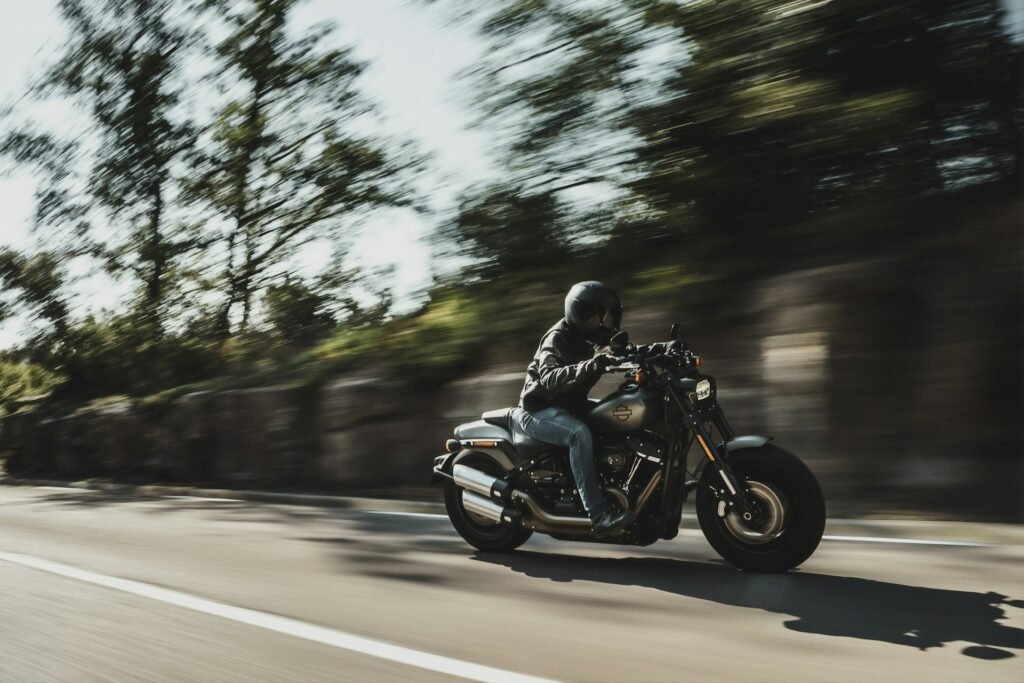
Choosing the right motorcycle exhaust system can transform your riding experience—adding 5-15 horsepower, reducing weight by up to 10kg, and delivering that iconic performance sound. Whether you’re building a custom cafe racer or upgrading a sport bike, the exhaust market in 2025 offers unprecedented options across titanium, stainless steel, and carbon fiber constructions.
As an ISO 9001 Certified manufacturer specializing in premium motorcycle exhaust systems, REXTORQUE has tested and analyzed hundreds of exhaust configurations in our Technical Dyno Testing Facility. This guide synthesizes real-world performance data, regulatory compliance information, and material science to help you select the optimal exhaust system for your motorcycle.
In this comprehensive ranking, we’ll cover everything from budget-friendly slip-ons to full racing systems, backed by dyno data, weight specifications, and sound measurements. You’ll learn which brands deliver the best performance-per-dollar, how to stay EPA-compliant, and what material choices mean for your specific riding style.
What Makes a Great Motorcycle Exhaust in 2025?
The best motorcycle exhaust systems balance five critical factors: performance gains, weight reduction, sound quality, legal compliance, and build quality. According to Cycle World’s exhaust engineering analysis, modern exhaust technology has evolved significantly with computer-aided flow dynamics and aerospace-grade materials.
Performance Metrics
What separates great exhausts from mediocre ones:
- 5-15 HP gains: Verified by dyno testing
- 40-60% weight reduction: Titanium vs stock steel
- Improved torque curve: Across RPM range
- Better throttle response: Reduced back pressure
Legal Compliance
Staying street-legal in 2025:
- 80 dB EPA limit: Federal standard for 1986+ bikes
- EPA stamping required: On chassis and exhaust
- State regulations vary: California strictest at 80 dB
- Catalytic converter retention: Required in many regions
⚡ Key Insight: According to BT Moto’s 2025 CBR1000RR-R dyno testing, an Akrapovič full system added approximately 3 rear-wheel horsepower on the latest Honda superbike, with gains improving dramatically when paired with ECU tuning and race fuel.
Top 10 Motorcycle Exhaust Systems: Expert Rankings
Our rankings are based on real-world testing data, owner feedback from thousands of installations, material specifications, and performance-per-dollar value. Each system has been evaluated across multiple motorcycle platforms.
1. Akrapovič Racing Line (Titanium Full System)
Best Overall Performance | Price: $2,800-$4,500 | Weight Savings: 4.5-6.5 kg
Akrapovič remains the gold standard in motorcycle exhausts for 2025, supplying systems to MotoGP, World Superbike, and top factory racing teams worldwide. The Racing Line titanium full system represents their flagship offering, featuring hand-welded Grade 5 titanium (Ti-6Al-4V alloy) construction throughout headers and mid-pipes.
Performance Data: Independent dyno testing shows 6-8% horsepower increases on sport bikes, with significant improvements in mid-range torque. On the 2025 Honda CBR1000RR-R, the Akrapovič system produced 198 rear-wheel HP on 91 octane—a 3 HP gain over stock that expanded to 207 HP with race fuel.
Best For: Serious performance riders, track day enthusiasts, riders who want the absolute best regardless of price.
✅ Pros: Maximum weight reduction, proven racing pedigree, exceptional build quality, significant HP gains, includes O2 sensor bungs and all hardware
❌ Cons: Premium pricing ($3,500+ average), may require ECU tuning for optimal gains, requires professional installation
2. Yoshimura R-77 Carbon Fiber Slip-On
Best Value Premium Slip-On | Price: $650-$850 | Weight Savings: 2.0-3.5 kg
Yoshimura’s R-77 represents the sweet spot for riders wanting significant performance and sound improvements without full-system costs. The carbon fiber construction combines lightness with durability, while the cone-shaped design optimizes exhaust flow velocity.
Performance Data: Slip-on systems typically deliver 3-5% HP gains—modest compared to full systems but achieved at a fraction of the cost. The R-77 particularly shines in mid-range torque, adding 2-4 ft-lbs between 4,000-8,000 RPM according to user dyno reports.
Best For: Street riders, weekend warriors, anyone wanting better sound and minor performance gains without breaking the bank.
3. Arrow Pro-Race Titanium System
Best Euro Alternative | Price: $1,800-$2,600 | Weight Savings: 3.8-5.2 kg
Italian brand Arrow has emerged as a legitimate Akrapovič competitor, supplying World Superbike teams and offering similar quality at 20-30% lower pricing. Their Pro-Race titanium systems feature laser-cut TIG welding and carbon fiber end caps.
Performance Data: Arrow systems deliver comparable gains to Akrapovič—typically 5-7% HP increases with full systems. Forum users consistently report “Arrow genuinely gives Akrapovic a run for their money” in build quality and performance.
Best For: European bike owners (Ducati, Triumph, Aprilia), riders wanting top-tier quality at mid-tier pricing.
4. Two Brothers Racing M2 Black Series
Best for American V-Twins | Price: $550-$950 | Weight Savings: 2.5-4.0 kg
Two Brothers Racing specializes in exhaust systems for Harley-Davidson, Indian, and American cruisers. The M2 Black Series features stainless steel construction with a ceramic black coating and signature slash-cut design.
Performance Data: V-twin engines respond differently to exhaust modifications, with the M2 typically adding 8-12 HP and significantly improving low-end torque—critical for cruiser riding styles. Sound output ranges from 92-98 dB depending on baffle configuration.
Best For: Harley-Davidson owners, cruiser riders, anyone wanting classic American exhaust sound and styling.
5. SC-Project S1 Silencer
Best Racing Technology | Price: $900-$1,400 | Weight Savings: 2.2-3.8 kg
SC-Project supplies exhausts to multiple MotoGP teams, and their S1 silencer brings racing technology to street-legal applications. Ultra-lightweight titanium construction with carbon fiber caps and aerospace-grade internal packing.
Performance Data: The S1 excels in high-RPM performance, with dyno charts showing continued power gains past 12,000 RPM on inline-four sport bikes. Weight savings of up to 60% compared to stock exhaust systems.
Best For: Track day riders, sport bike owners, anyone prioritizing maximum weight reduction and high-RPM performance.
6. REXTORQUE Custom Titanium Full System
Best Custom Fabrication | Price: $1,900-$2,800 | Weight Savings: 4.0-6.0 kg
Our custom titanium exhaust systems are hand-fabricated in Greece using Grade 9 titanium alloy, combining European craftsmanship with precision TIG welding. Each system is built to customer specifications with options for specific power band tuning.
Performance Data: Custom systems allow optimization for specific engines and riding styles. Our dyno testing facility verifies each installation, with typical gains of 6-10 HP depending on base motorcycle and tuning objectives. ISO 9001 Certified manufacturing ensures consistent quality across all custom builds.
Best For: Cafe racer builders, unique motorcycles requiring custom solutions, European riders wanting local fabrication and support.
💡 REXTORQUE Advantage: Unlike mass-produced systems, our custom fabrication services accommodate unique frame geometries, non-standard engine configurations, and aesthetic preferences. Every exhaust is dyno-tested before delivery, with full documentation provided.
7. Termignoni Racing Silencer
Best for Ducati Owners | Price: $850-$1,600 | Weight Savings: 2.5-4.5 kg
Termignoni maintains close relationships with Ducati, often appearing as factory options on Panigale and Scrambler models. Their racing silencers feature titanium or carbon fiber construction with removable dB killers for track use.
Performance Data: Termignoni systems are specifically tuned for Ducati’s L-twin and V4 engines, with gains of 5-8 HP typical on Panigale V4 applications. The signature deep, throaty sound is prized by Ducati enthusiasts.
Best For: Ducati owners, riders wanting factory-matched exhaust solutions, Italian bike enthusiasts.
8. Vance & Hines Twin Slash Slip-Ons
Best for Harley Baggers | Price: $500-$750 | Weight Savings: 3.0-4.5 kg
Vance & Hines dominates the Harley-Davidson aftermarket with exhausts designed specifically for touring and bagger applications. The Twin Slash series features integrated heat shields, anti-bluing technology, and O2 sensor compatibility.
Performance Data: Designed for Milwaukee-Eight engines, these slip-ons add 6-9 HP and significantly improve mid-range torque. Sound levels range from 88-95 dB depending on model, staying within most state regulations.
Best For: Harley touring bike owners, riders prioritizing heat management, baggers and dressers.
9. LeoVince LV-10 Stainless Steel
Best Budget Full System | Price: $800-$1,200 | Weight Savings: 2.8-4.0 kg
LeoVince offers exceptional value with their LV-10 full systems, using 304 stainless steel construction throughout. While heavier than titanium alternatives, build quality and performance exceed the price point.
Performance Data: Stainless steel systems deliver similar HP gains to titanium (4-7% increases) but at significantly lower cost. The LV-10’s mandrel-bent headers maintain consistent diameter for optimal flow.
Best For: Budget-conscious riders, anyone wanting full-system performance without premium materials pricing.
10. Austin Racing GP1R Exhaust
Best for British Bikes | Price: $1,100-$1,700 | Weight Savings: 3.2-4.8 kg
Austin Racing specializes in exhausts for Triumph, Norton, and British motorcycles. The GP1R features hand-welded stainless steel or titanium construction with distinctive carbon fiber end caps.
Performance Data: Optimized for triple-cylinder Triumph engines, the GP1R adds 7-10 HP on Speed Triple and Street Triple applications. Sound signature balances performance with compliance—typically 88-92 dB.
Best For: Triumph owners, British bike enthusiasts, riders wanting brand-specific optimization.
Exhaust Material Comparison: Titanium vs Stainless Steel vs Carbon Fiber
Material choice significantly impacts performance, weight, durability, and price. Understanding the engineering trade-offs helps match exhaust systems to specific riding requirements.
| Material | Weight vs Stock | Durability | Heat Resistance | Price Range | Best Application |
|---|---|---|---|---|---|
| Grade 5 Titanium | 40-60% lighter | Excellent (20+ years) | 900°C continuous | $2,500-$4,500 | Racing, sport bikes, weight-critical builds |
| Grade 9 Titanium | 40-55% lighter | Excellent (15-20 years) | 850°C continuous | $1,800-$3,200 | Custom fabrication, cafe racers |
| 304 Stainless Steel | 10-20% lighter | Very Good (10-15 years) | 800°C continuous | $600-$1,500 | Street bikes, budget builds, daily riders |
| 316 Stainless Steel | 10-20% lighter | Excellent (15-20 years) | 850°C continuous | $800-$1,800 | Coastal regions, high-corrosion environments |
| Carbon Fiber | 30-45% lighter | Good (8-12 years)* | 600°C limit | $900-$2,200 | Aesthetics, slip-ons, visual appeal |
*Carbon fiber durability assumes proper heat shielding and internal metal liner. External aesthetics may degrade faster than metal alternatives.
🔬 Material Science Note: According to our comprehensive titanium exhaust guide, Grade 5 titanium (Ti-6Al-4V) offers the best strength-to-weight ratio but requires specialized TIG welding equipment. Our ISO 9001 certified facility uses argon back-purging during welding to prevent oxidation and ensure structural integrity.
Performance Gains: What to Expect from Different Exhaust Types
Realistic performance expectations vary dramatically between slip-on mufflers and full exhaust systems. Understanding these differences prevents disappointment and helps budget appropriately.
Slip-On Systems
HP Gains: 2-5 HP (3-5%)
Weight Savings: 2-4 kg
- Replaces only rear muffler
- Easiest installation (30-60 min)
- Most affordable option
- Significant sound improvement
- Minor performance gains
- No ECU tuning typically required
Cat-Back Systems
HP Gains: 5-10 HP (5-8%)
Weight Savings: 3-6 kg
- Replaces exhaust after catalytic converter
- Moderate installation (1-2 hours)
- Mid-range pricing
- Improved flow over slip-ons
- Maintains emissions compliance
- ECU tuning recommended
Full Racing Systems
HP Gains: 8-15+ HP (6-12%)
Weight Savings: 4-10 kg
- Replaces entire system from headers
- Complex installation (2-4 hours)
- Premium pricing
- Maximum performance potential
- Often removes catalytic converter
- ECU tuning required for optimal gains
According to Cycle World’s exhaust engineering analysis, the greatest performance gains come from reducing back pressure and improving exhaust scavenging effects. Full systems optimize the entire flow path, while slip-ons only address the final restriction point.
Legal Compliance: EPA Regulations and Sound Limits
Staying street-legal requires understanding federal EPA regulations and state-specific sound ordinances. Violations can result in fines, failed inspections, and voided insurance claims.
Federal EPA Standards
The Environmental Protection Agency regulates motorcycle exhaust noise under 40 CFR Part 205 Subpart E. Key requirements include:
- 80 dB limit: Motorcycles manufactured after 1985 must not exceed 80 decibels measured at 50 feet under full throttle acceleration
- EPA stamping required: All compliant exhaust systems must display EPA approval stamps on both the chassis and exhaust component
- Defeat device prohibition: Removable baffles or components that increase sound levels beyond EPA limits are illegal for street use
- Replacement requirements: Aftermarket exhausts must maintain or improve emissions compliance compared to original equipment
State and Local Regulations
Strictest States
- California: 80 dB limit, CARB compliance required, visual exhaust inspections
- New York: 82 dB limit, annual safety inspections include exhaust checks
- Massachusetts: 82 dB limit, enhanced inspection requirements
- Connecticut: 86 dB limit, local ordinances may be stricter
Common Violations
- $250-$1,000 fines: Typical first offense penalties
- Fix-it tickets: Requiring proof of compliant exhaust installation
- Insurance issues: Modifications may void coverage
- Resale complications: Non-compliant bikes harder to sell
⚠️ Legal Warning: According to EPA regulations (40 CFR 205.169), it is illegal to remove or render inoperative any emission control device. Even for off-road use, EPA rules prohibit manufacturing or selling exhaust systems that bypass catalytic converters. Track-only exhausts must be clearly labeled “For Closed Course Competition Only.”
Installation Considerations and Costs
Professional installation ensures proper fitment, prevents exhaust leaks, and maintains warranty coverage. While experienced mechanics can install slip-ons themselves, full systems often require specialized tools and knowledge.
| Exhaust Type | DIY Difficulty | Install Time | Labor Cost | Special Tools Required |
|---|---|---|---|---|
| Slip-On Muffler | Easy | 30-60 minutes | $50-$100 | Socket set, torque wrench |
| Cat-Back System | Moderate | 1-2 hours | $100-$250 | Jack stands, exhaust hanger tools, penetrating oil |
| Full System (Headers) | Difficult | 2-4 hours | $250-$500 | Oxygen sensor tools, gasket scrapers, anti-seize compound |
| Custom Fabrication | Professional Only | 6-12 hours | $600-$1,500 | TIG welding equipment, mandrel bender, dyno access |
ECU Tuning: When Is It Necessary?
Aftermarket exhausts alter the air-fuel ratio that factory ECU programming expects. While slip-ons usually work acceptably with stock tuning, full systems require ECU adjustments to prevent lean running conditions and unlock full performance potential.
- Flash tuning: $300-$600 for pre-programmed maps optimized for specific exhaust systems
- Dyno tuning: $500-$900 for custom fuel maps tailored to your specific motorcycle and exhaust combination
- Piggyback modules: $200-$400 for devices like Power Commander or Bazzaz that modify signals without reflashing ECU
Exhaust Sound: Understanding Decibel Levels and Tone
Sound quality remains one of the primary motivations for exhaust upgrades, but objective measurements help set realistic expectations and avoid legal issues.
Sound Level Reference
- Stock exhaust: 78-82 dB
- Sport slip-on (baffled): 88-92 dB
- Racing slip-on (baffled): 94-98 dB
- Full system (no baffle): 102-108 dB
- Straight pipes: 110-115+ dB (illegal everywhere)
Tone Characteristics
- Titanium: Higher-pitched metallic note, sharp on deceleration
- Stainless steel: Deep, throaty tone with good bass frequencies
- Carbon fiber: Similar to titanium but slightly muted
- Short megaphones: Aggressive bark, loud on acceleration
- GP-style silencers: Screaming high-RPM wail, quieter at idle
Decibel Scale Context: Every 10 dB increase represents a doubling of perceived loudness. A 95 dB exhaust sounds twice as loud as an 85 dB system, even though the numerical difference is only 10.
Maintenance and Longevity
Quality exhaust systems require minimal maintenance but benefit from periodic inspection and care to maximize lifespan.
🔧 Maintenance Schedule:
- Every 3,000 miles: Check mounting hardware torque, inspect for cracks or discoloration
- Every 10,000 miles: Repack fiberglass or stainless steel wool (if applicable), clean exterior surfaces
- Annually: Inspect welds and joints for cracks, check mounting rubber for deterioration
- After track use: Allow complete cool-down before transport, inspect for impact damage
Common Issues and Solutions
- Blue discoloration (titanium): Normal heat patina, indicates proper temperature range, can be polished if preferred
- Carbon buildup: Use carbon cleaner spray monthly, indicates rich fuel mixture if excessive
- Rattling baffles: Remove and repack with fresh material, check for broken internal components
- Exhaust leaks: Replace gaskets immediately, retorque header bolts when engine is warm
Key Takeaways
- Performance Hierarchy: Full titanium systems deliver maximum gains (8-15 HP) but cost 3-5x more than quality slip-ons (2-5 HP). For street riders, slip-ons offer the best sound-to-dollar ratio.
- Material Matters: Titanium saves 40-60% weight but costs premium. Stainless steel provides 90% of the performance at half the price. Choose based on your priorities: racing/track = titanium, street/daily = stainless.
- Legal Compliance: The federal EPA limit is 80 dB for 1986+ motorcycles. Most sport exhausts exceed this—plan for potential tickets in strict enforcement areas like California.
- ECU Tuning Required: Full exhaust systems need fuel mapping adjustments. Budget $300-$900 for tuning to prevent lean conditions and unlock full power potential.
- Brand Rankings 2025: Akrapovič remains the performance leader, Arrow offers the best value alternative, Yoshimura dominates slip-ons, and REXTORQUE provides custom solutions unavailable from mass manufacturers.
- Installation Complexity: Slip-ons are DIY-friendly (30-60 min). Full systems require mechanical skills and specialized tools (2-4 hours). Budget $250-$500 for professional installation of full systems.
- Realistic Expectations: Marketing claims exaggerate gains. Real-world results: slip-ons add 3-5%, cat-back systems 5-8%, full systems 8-12%. Gains vary by base motorcycle and tuning quality.
Frequently Asked Questions
Is it worth upgrading to a full exhaust system or should I just get a slip-on?
This depends on your goals and budget. Slip-on mufflers cost $400-$900, install in 30-60 minutes, and add 2-5 horsepower with significant sound improvement—excellent value for street riders. Full systems cost $1,500-$4,500, require 2-4 hour professional installation plus $300-$900 ECU tuning, but deliver 8-15 HP gains with maximum weight reduction. For track and racing use, full systems justify the cost. For weekend canyon rides and commuting, quality slip-ons provide 80% of the satisfaction at 25% of the cost.
Will an aftermarket exhaust void my motorcycle warranty?
Under the Magnuson-Moss Warranty Act, manufacturers cannot automatically void entire warranties due to aftermarket parts. However, they can deny warranty claims directly related to the modification. For example, if your aftermarket exhaust causes engine damage due to lean running, that repair won’t be covered. Unrelated claims (electrical issues, suspension problems) remain covered. To minimize risk: keep your stock exhaust, use EPA-compliant aftermarket systems, get proper ECU tuning, and document professional installation. Dealerships vary in their stance—some are modification-friendly, others strictly enforce OEM-only policies.
How much horsepower can I realistically gain from an exhaust upgrade?
According to BT Moto’s 2025 dyno testing, realistic gains are: slip-on mufflers add 2-5 HP (3-5% increase), cat-back systems add 5-10 HP (5-8%), and full racing systems add 8-15 HP (6-12%). These numbers assume proper ECU tuning—without fuel mapping adjustments, you may see only 50-70% of potential gains. Sport bikes respond better than cruisers due to higher-revving engines. The 2025 Honda CBR1000RR-R gained 3 HP from an Akrapovič system on pump gas, expanding to 9 HP with race fuel and ECU optimization. Marketing claims of 20+ HP gains are unrealistic without extensive engine modifications beyond just exhaust.
What’s the difference between titanium and stainless steel exhausts?
Titanium exhausts weigh 40-60% less than stainless steel equivalents, saving 4-10 kg on full systems. This weight reduction improves handling, acceleration, and braking. Titanium also resists corrosion better and tolerates higher temperatures (900°C vs 800°C). However, titanium costs 2-3x more ($2,500-$4,500 vs $800-$1,800 for full systems). Stainless steel delivers nearly identical horsepower gains—the performance difference is less than 2%. Choose titanium for racing, track days, or weight-critical builds. Choose stainless steel for street riding, budget builds, or when durability matters more than ultimate weight savings. Our complete titanium exhaust guide covers material grades and applications in detail.
Are motorcycle exhausts with removable baffles legal?
Removable baffles create legal gray areas. Under EPA regulations (40 CFR 205.169), exhaust systems must maintain EPA compliance under all configurations. Removable baffles that allow sound levels to exceed 80 dB are technically illegal “defeat devices” even if you only remove them for track use. In practice, enforcement varies by state. California, New York, and Massachusetts strictly prohibit removable baffles. Most other states rarely enforce unless sound complaints are filed. For legal protection: keep baffles installed for street riding, only remove for track days at closed-course facilities, and carry documentation proving EPA compliance with baffles installed. Some manufacturers now offer “track-only” exhausts clearly labeled as non-street-legal.
Do I need to re-tune my motorcycle after installing an exhaust?
Slip-on mufflers usually run acceptably on stock ECU maps since they don’t dramatically alter airflow. However, full exhaust systems remove catalytic converters and change back pressure significantly, causing lean air-fuel ratios that damage engines. Warning signs you need tuning: popping on deceleration, hesitation during acceleration, poor fuel economy, or excessive heat. Budget $300-$600 for flash tuning with pre-programmed maps (Dynojet, Bazzaz, Woolich), or $500-$900 for custom dyno tuning. Custom tuning extracts maximum performance and ensures safe operation across all RPM ranges. Some manufacturers include ECU maps with their exhausts—Akrapovič and Arrow often bundle tuning files with full racing systems.
What causes motorcycle exhaust pipes to turn blue?
Blue and gold discoloration on titanium exhausts results from heat-induced oxidation—a normal patina indicating proper operating temperatures (500-900°C). The color spectrum (gold → purple → blue) corresponds to temperature zones, with blue appearing at the hottest points near exhaust ports. This is not damage and actually protects the metal. On stainless steel, persistent blue discoloration suggests excessively lean fuel mixtures causing temperatures above 800°C—this requires immediate ECU tuning to prevent engine damage. Some riders embrace the blue patina as racing aesthetics. To maintain polished appearance, use titanium polish and heat-resistant coatings, though the discoloration will return under normal use.
Can I install a motorcycle exhaust myself or do I need a professional?
Slip-on muffler installation is DIY-friendly for mechanically inclined riders: remove stock muffler (usually 2-4 bolts), slide on new unit, torque hardware to spec (typically 15-20 ft-lbs). Time required: 30-60 minutes with basic socket set. Full exhaust systems are significantly more complex: removing fairings, disconnecting oxygen sensors, replacing gaskets, routing headers around frame, adjusting hangers. Risk of stripped threads, exhaust leaks, or improper fitment. Unless you have mechanical experience, motorcycle lift, and 2-4 hours available, professional installation ($250-$500) ensures proper fitment and prevents warranty issues. Custom fabrication always requires professional services—our REXTORQUE custom systems include installation verification and dyno testing.
How long do aftermarket motorcycle exhausts last?
Lifespan depends on material and maintenance. Titanium exhausts last 15-20+ years with minimal maintenance—corrosion resistance and heat tolerance ensure longevity. Stainless steel (304 grade) lasts 10-15 years in normal conditions, longer with periodic cleaning. 316 stainless steel (marine grade) extends to 15-20 years even in coastal environments. Carbon fiber silencers last 8-12 years, with the carbon weave potentially fading before structural failure. Internal packing materials (fiberglass, stainless wool) need replacement every 10,000-20,000 miles to maintain sound dampening and prevent metal-to-metal contact. Factors reducing lifespan: salt exposure (coastal/winter roads), excessive idling (overheating), lack of proper cool-down after spirited riding, and low-speed tip-overs damaging external surfaces. Quality exhausts from Akrapovič, Yoshimura, Arrow, and REXTORQUE routinely exceed manufacturer warranties with proper care.
What’s the best motorcycle exhaust for a beginner rider?
Beginners should prioritize quality slip-on systems from established brands: Yoshimura R-77 ($650-$850), Two Brothers M2 Black ($550-$750), or LeoVince LV-10 ($400-$650). These offer significant sound improvement and 2-5 HP gains without the complexity and cost of full systems. Slip-ons work with stock ECU tuning, install in under an hour, and don’t risk warranty issues. Avoid cheap universal-fit mufflers under $300—poor fitment, questionable materials, and minimal performance gains. Also avoid full racing systems until you have riding experience to appreciate the performance difference and mechanical skills for proper installation. Save the $3,000+ titanium investment for when you’ve developed riding skills to utilize the performance advantage. Focus budget on rider training, safety gear, and suspension upgrades that improve skill and confidence faster than exhaust modifications.
Are custom-fabricated exhausts better than mass-produced systems?
Custom exhausts excel for unique applications: rare motorcycles without aftermarket support, heavily modified engines requiring specific tuning, cafe racer builds with frame modifications, or aesthetic preferences unavailable from catalog parts. Our REXTORQUE custom fabrication services optimize header diameter, collector design, and muffler volume for specific power band objectives—something impossible with mass-produced systems. However, custom work costs $1,900-$3,500 and requires 2-3 weeks fabrication time. For common sport bikes (Yamaha R1, Kawasaki ZX-10R, Honda CBR1000RR), mass-produced systems from Akrapovič or Arrow offer excellent performance at lower cost with immediate availability. Custom makes sense when: your motorcycle has no aftermarket options, you need unique routing for frame modifications, or you want power delivery tuned for specific racing requirements. For standard motorcycles, quality mass-produced exhausts provide 95% of the performance at 60% of the cost.
Final Verdict: Which Exhaust Should You Choose?
The “best” motorcycle exhaust depends entirely on your specific motorcycle, riding style, performance goals, and budget. However, clear winners emerge in each category:
🏆 Best Overall Value
Yoshimura R-77 Carbon Slip-On ($650-$850) delivers premium build quality, 3-5 HP gains, significant weight savings, and exceptional sound—all without requiring ECU tuning or complex installation. The best choice for 70% of street riders.
🏆 Best Ultimate Performance
Akrapovič Racing Line Titanium ($2,800-$4,500) remains unmatched for maximum weight reduction, proven racing pedigree, and measurable horsepower gains. Worth the premium for serious track riders and performance enthusiasts.
🏆 Best Budget Option
LeoVince LV-10 Stainless ($800-$1,200) provides full-system performance at slip-on pricing. Mandrel-bent construction and quality materials deliver results that embarrass exhausts costing twice as much.
🏆 Best for Custom Builds
REXTORQUE Custom Titanium ($1,900-$2,800) offers hand-fabricated solutions for cafe racers, unique motorcycles, and riders wanting power delivery optimized for specific objectives. ISO 9001 certified manufacturing ensures quality.
Need a Custom Exhaust Solution?
REXTORQUE specializes in hand-fabricated titanium exhaust systems for unique motorcycles and custom builds. Our ISO 9001 certified facility combines European craftsmanship with precision dyno testing to deliver systems optimized for your specific performance objectives.
Conclusion
Selecting the best motorcycle exhaust system in 2025 requires balancing performance gains, legal compliance, build quality, and budget constraints. While titanium full systems from Akrapovič and Arrow dominate the performance rankings, quality slip-ons from Yoshimura and Two Brothers Racing deliver exceptional value for street riders.
Remember that exhaust upgrades work synergistically with other modifications—pairing a premium exhaust with proper ECU tuning, high-flow air filters, and suspension upgrades compounds performance benefits. Focus on systems from established manufacturers with proven racing pedigrees, maintain EPA compliance to avoid legal issues, and budget for professional installation and tuning when installing full systems.
Whether you choose mass-produced excellence from global brands or custom fabrication from specialized builders like REXTORQUE, investing in quality exhaust components transforms your motorcycle’s performance, sound, and riding experience for years to come.