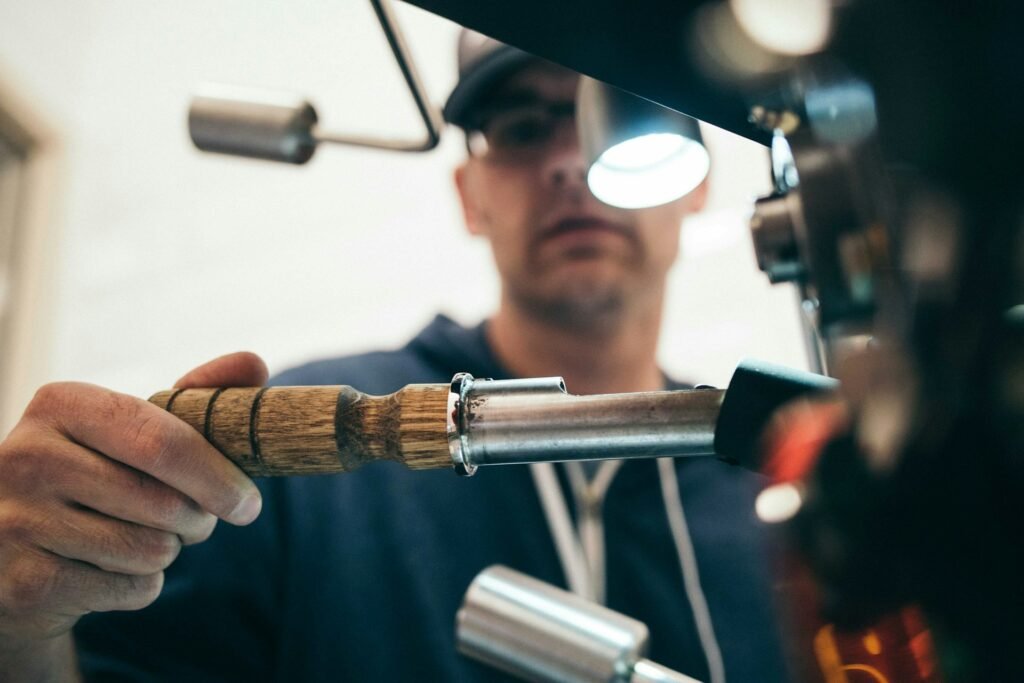
When it comes to motorcycle performance modifications, few upgrades deliver the combination of weight reduction, durability, and aesthetic appeal quite like a custom titanium exhaust system. At REXTORQUE, we specialize in hand-crafted titanium exhaust fabrication, combining European craftsmanship with precision engineering to create exhaust systems that transform your motorcycle’s performance and character.
As an ISO 9001 Certified manufacturer based in Greece, we’ve mastered the art of custom titanium fabrication, producing exhaust systems for cafe racers, sport bikes, and custom builds that demand nothing but the best. With our in-house dyno testing facility and decades of metalworking expertise, we understand exactly what separates a mass-produced exhaust from a truly exceptional hand-crafted system.
Why Choose Custom Titanium Exhaust Fabrication?
Custom titanium exhaust systems represent the pinnacle of motorcycle exhaust technology. Unlike off-the-shelf alternatives, a hand-crafted titanium exhaust is engineered specifically for your motorcycle, your riding style, and your performance goals.
💡 Key Insight: According to Vivid Racing’s exhaust systems analysis, titanium exhausts are approximately 40-45% lighter than stainless steel equivalents, which translates to measurable improvements in handling, acceleration, and overall power-to-weight ratio.
Unmatched Weight Reduction
Titanium’s density of 4.51 g/cm³ compared to steel’s 7.8 g/cm³ means a full titanium exhaust system can save 40-100 pounds depending on your motorcycle. This isn’t just a number on paper—according to Top Speed Auto’s titanium exhaust analysis, dropping 100 pounds from a vehicle allows it to complete the quarter-mile 0.133 seconds faster, equivalent to adding 14 horsepower.
Superior Heat Resistance and Durability
Titanium maintains its structural integrity at temperatures exceeding 800°C (1,472°F), making it ideal for high-performance applications. The material forms a protective oxide layer that provides exceptional corrosion resistance, even in harsh coastal environments like those found throughout Greece and the Mediterranean.
Performance Gains
Custom titanium exhausts don’t just reduce weight—they optimize exhaust flow. According to Factory Racing’s performance analysis, aftermarket titanium exhaust systems from premium manufacturers deliver horsepower gains of 5-10% depending on the motorcycle model and tuning setup.
Understanding Titanium Grades for Exhaust Systems
Not all titanium is created equal. The grade of titanium used in exhaust fabrication significantly impacts performance, durability, and cost.
Titanium Grade Comparison for Exhaust Applications
| Property | Grade 2 (CP Ti) | Grade 9 (3Al-2.5V) | Grade 5 (6Al-4V) |
|---|---|---|---|
| Composition | 99.2%+ Pure Ti | Ti + 3% Al + 2.5% V | Ti + 6% Al + 4% V |
| Max Service Temp | 400°C (752°F) | 425°C (797°F) | 450°C (842°F) |
| Formability | Excellent | Good | Moderate |
| Weldability | Excellent | Very Good | Good |
| Best Application | Street bikes, cruisers | Sport bikes, track use | Racing, extreme performance |
| Relative Cost | $ | $$ | $$$ |
At REXTORQUE, we typically use Grade 9 titanium for custom motorcycle exhaust systems. This alloy offers the optimal balance of strength, formability, weldability, and cost-effectiveness for most applications. For extreme racing applications, we can fabricate systems using Grade 5 titanium, which retains 80% of its room-temperature strength at 450°C according to Ti-TEK UK’s titanium grade analysis.
The Custom Titanium Exhaust Fabrication Process
Creating a custom titanium exhaust system is a meticulous process that combines traditional metalworking artistry with modern precision engineering. Here’s how we craft each exhaust system at our Greece facility.
Step 1: Design and Engineering
Every custom exhaust begins with detailed measurements of your motorcycle. We use precision calipers and templates to capture the exact mounting points, clearances, and routing requirements. For complex builds, we create CAD models to visualize the final system and optimize exhaust gas flow.
Our design phase considers:
- Header diameter and length – Optimized for your engine’s displacement and RPM range
- Collector design – 2-into-1, 2-into-2, or 4-into-1 configurations based on performance goals
- Muffler selection – Balancing sound levels with flow efficiency
- Ground clearance – Ensuring adequate clearance for cornering
- Heat management – Routing exhaust away from heat-sensitive components
Step 2: Material Selection and Preparation
We source premium-grade titanium tubing with 1.2mm wall thickness—the industry standard for strength-to-weight optimization according to KDMFab’s titanium exhaust specifications. Available tube diameters range from 40mm to 80mm to accommodate different engine sizes and performance requirements.
⚠️ Critical Factor: Titanium requires absolute cleanliness during fabrication. According to The Fabricator’s TIG welding guide, contamination from body oils, cutting fluids, or shop dust can lead to weld embrittlement and premature failure. We maintain dedicated titanium-only work areas to prevent cross-contamination.
Step 3: Mandrel Bending
Unlike crush bending, which deforms the tube’s internal diameter, mandrel bending maintains consistent internal diameter throughout each bend. This is crucial for maintaining optimal exhaust flow and preventing turbulence that robs horsepower.
Our CNC mandrel bender creates precision bends with tight radius capabilities, allowing complex routing while maintaining structural integrity. Each bend is carefully planned to minimize restrictions while achieving the desired aesthetic.
Step 4: TIG Welding – The Art of Titanium Fabrication
This is where European craftsmanship truly shines. Welding titanium requires expertise that comes only from years of experience. We use TIG (Tungsten Inert Gas) welding with Direct Current Electrode Negative (DCEN) polarity, which focuses heat precisely on the workpiece.
Our TIG welding process includes:
100% Argon Shielding
Pure argon gas shields the weld pool from oxygen contamination. We use trailing shields to protect the weld zone until it cools below 430°C (800°F), preventing oxidation that weakens the joint.
Back-Purging
Argon is flowed through the inside of the tube during welding to shield the backside of the weld. This prevents internal oxidation and ensures the weld is as strong on the inside as the outside.
Precise Heat Control
Titanium’s low thermal conductivity means heat stays localized. Our experienced welders use foot pedal control to modulate amperage throughout each weld pass, preventing overheating and maintaining grain structure.
Clean Environment
Titanium welding is performed in our dedicated titanium fabrication bay with filtered air to minimize airborne contaminants. Every surface that touches titanium is cleaned with acetone before welding.
According to YesWelder’s titanium welding guide, TIG welding is universally accepted as the best method for joining titanium because it provides precise control over heat input and weld pool, allowing for the clean, strong welds essential for exhaust applications.
Step 5: Fitment and Test Assembly
Before final welding, we perform a complete test fit on your motorcycle. This ensures perfect alignment with mounting brackets, proper ground clearance, and no interference with other components like the center stand, footpegs, or swing arm.
Minor adjustments are made at this stage to ensure the exhaust sits exactly where intended, with proper support at all mounting points to prevent stress cracking from vibration.
Step 6: Surface Finishing
Titanium offers unique finishing options that enhance both aesthetics and corrosion resistance:
- Natural Silver Finish – Raw titanium with light brushing for a subtle, industrial look
- Polished Mirror Finish – Hand-polished to a brilliant reflective surface
- Heat-Treated Color – Controlled heat application creates vibrant blue, purple, or gold oxidation patterns
- Brushed Finish – Directional brushing creates a refined matte appearance
The heat-treated color option is particularly popular, as it produces the iconic blue-to-gold gradient associated with high-performance titanium exhausts. This isn’t paint or coating—it’s a controlled oxidation process that’s part of the metal itself.
Step 7: Quality Control and Dyno Testing
Every REXTORQUE custom titanium exhaust undergoes rigorous quality inspection and dyno testing. We pressure-test for leaks, verify all welds meet our structural standards, and document before/after performance gains.
Our dyno testing facility measures:
- Peak horsepower and torque gains
- Power curve improvements across the RPM range
- Air-fuel ratio optimization
- Sound level measurements (dB at various RPMs)
Custom Titanium Exhaust vs. Stainless Steel: The Real Comparison
Many riders wonder if the investment in custom titanium is worth it compared to stainless steel. Let’s break down the real-world differences.
Material Performance Comparison
| Factor | Titanium | 304 Stainless Steel |
|---|---|---|
| Weight (Full System) | 24 lbs (typical) | 52+ lbs (typical) |
| Corrosion Resistance | Excellent (superior oxide layer) | Very Good |
| Max Operating Temperature | 800°C+ (1,472°F) | 650°C (1,202°F) |
| Sound Characteristic | High-pitched, exotic tone | Deep, throaty tone |
| Durability (Street Use) | Good (requires quality welding) | Excellent |
| Cost (Custom Fabrication) | €2,500-€4,000+ | €1,200-€2,000 |
| Best For | Track, racing, weight-critical builds | Daily riders, street performance |
When Titanium Makes Sense
Based on 5250 Performance’s material comparison analysis, titanium is the smart choice when:
- Track days and racing – Weight reduction translates directly to faster lap times
- Cafe racer and custom builds – The aesthetic and exotic appearance justify the investment
- High-performance applications – Where you’re extracting every possible advantage
- Coastal environments – Superior corrosion resistance in salt air conditions
- Collector value – Premium builds that will appreciate in value
When Stainless Steel Is Better
For 95% of street riders, 304 stainless steel offers the best value. It’s strong, reliable, cost-effective, and delivers excellent durability under high-heat conditions. Stainless steel is particularly recommended for daily commuters who rarely push the engine hard.
Pricing: What Does a Custom Titanium Exhaust Actually Cost?
Let’s address the elephant in the room—custom titanium exhausts are expensive. But understanding the pricing structure helps explain why.
💰 Real-World Pricing: At REXTORQUE, our custom titanium exhaust systems typically range from €2,500 to €4,500 depending on complexity, grade of titanium, and finishing options. For reference, according to Caliber Customs’ pricing, custom exhaust systems start at $2,500 USD, with titanium commanding premium pricing due to material and labor costs.
Price Breakdown:
- Raw materials – Two feet of 2-inch diameter titanium pipe costs €65-70, compared to €25 for stainless steel
- Skilled labor – Titanium welding requires specialist expertise; expect 15-25 hours of fabrication time
- Equipment costs – Dedicated titanium-only tools, back-purging systems, trailing shields
- Quality control – Dyno testing, pressure testing, fit verification
- Finishing – Polishing, heat treatment, or brushing adds labor time
Compare this to mass-produced titanium slip-ons from major brands (€800-€1,500) which use automated manufacturing but offer limited customization and may not fit your specific build requirements.
Maintenance and Longevity: How Long Do Titanium Exhausts Last?
The longevity of titanium exhausts is a topic of debate in the motorcycle community. Let’s separate fact from fiction.
Expected Lifespan
According to discussions on forums like 1000RR.net’s titanium exhaust longevity thread, properly fabricated titanium exhausts can last 10+ years on street bikes. One owner reported an original titanium exhaust on a 2001 Corvette with 90,000 miles showing no issues.
However, quality matters enormously. Some cheaper titanium exhausts have been observed developing cracks on and near welds after just 2-3 years, particularly on aggressive track bikes that experience repeated thermal cycling and vibration stress.
Critical Factors Affecting Longevity:
Weld Quality
The #1 factor in titanium exhaust longevity. Poor shielding during welding creates weak, contaminated welds that crack under stress. Our ISO 9001 certified welding processes ensure every joint meets aerospace-grade standards.
Proper Support
Exhaust systems need adequate mounting points to prevent stress concentration. Our designs include rubber-isolated hangers at strategic locations to absorb vibration without transmitting loads to welds.
Thermal Cycling
Repeated heating and cooling stresses all materials. Titanium’s low thermal expansion coefficient actually helps here—it experiences less thermal stress than steel during heat cycles.
Riding Conditions
Track use with hard launches and aggressive cornering is harder on exhausts than street riding. Most cracking happens during aggressive track driving and going over kerbs according to racing community reports.
Maintenance Requirements
Titanium exhausts require minimal maintenance compared to stainless steel:
- Cleaning – Mild soap and water; avoid harsh chemicals or abrasive cleaners
- Inspection – Visual check of welds and mounting points every 5,000 km
- Mounting hardware – Check rubber hangers and springs for wear
- Heat cycling – Allow proper warm-up before aggressive riding to reduce thermal shock
European Craftsmanship: Why Greece?
Greece might not be the first country that comes to mind for motorcycle exhaust fabrication, but our location offers distinct advantages for custom titanium work.
Mediterranean Metalworking Heritage
Greece has a 3,000-year tradition of metalworking, dating back to the bronze workshops of ancient Athens and Sparta. This heritage of craftsmanship, passed down through generations, informs our approach to modern titanium fabrication. We combine time-honored attention to detail with cutting-edge materials science.
Testing in Real Conditions
Greece’s varied terrain—from mountain passes to coastal highways—provides ideal testing conditions for exhaust systems. The salt air of the Aegean Sea is particularly demanding on corrosion resistance, ensuring any exhaust we produce can handle harsh maritime environments.
ISO 9001 Certification
Our ISO 9001 certification ensures consistent quality across every exhaust system we produce. This internationally recognized standard requires documented procedures, quality control checkpoints, and continuous improvement processes that guarantee each REXTORQUE exhaust meets the same exacting standards.
Key Takeaways
- Weight Reduction: Titanium exhausts save 40-45% weight compared to steel, translating to measurable performance improvements equivalent to adding 14+ horsepower
- Material Selection: Grade 9 titanium (3Al-2.5V) offers the best balance of performance, weldability, and cost for most custom motorcycle applications
- Fabrication Quality: TIG welding with proper argon shielding, back-purging, and contamination control is essential for durable titanium welds
- Realistic Pricing: Custom titanium exhausts range from €2,500-€4,500; the premium reflects specialized materials, skilled labor, and quality control
- Longevity: Properly fabricated titanium exhausts can last 10+ years on street bikes; weld quality is the most critical factor affecting lifespan
- Best Applications: Titanium makes the most sense for track use, custom builds, coastal environments, and applications where weight reduction justifies the investment
Frequently Asked Questions
Is a custom titanium exhaust worth the cost compared to off-the-shelf options?
Custom titanium exhausts are worth the investment when you need a perfect fit for a modified or rare motorcycle, want specific performance characteristics, or are building a high-end custom bike. Off-the-shelf systems work well for popular models but may require compromises in fitment or performance. Custom fabrication ensures optimal header length, collector design, and mounting for your specific application. For show bikes, cafe racers, or serious track machines, the custom approach delivers results impossible with mass-produced alternatives.
How much horsepower will I gain from a custom titanium exhaust?
Typical horsepower gains range from 5-10% depending on your motorcycle’s engine displacement, existing exhaust restrictions, and whether you combine the exhaust with tuning. A properly designed custom exhaust optimizes header length and diameter for your engine’s specific characteristics, potentially delivering better gains than generic systems. However, the real benefit comes from the combination of weight reduction (improving power-to-weight ratio) and slightly increased peak power. On a 100hp sportbike, expect 5-8 additional horsepower plus the handling benefits of 20-30 pounds less weight.
Will a titanium exhaust crack or fail on street bikes?
High-quality titanium exhausts with proper TIG welding, argon shielding, and appropriate support mounting can last 10+ years on street bikes. Failures typically occur when: 1) Welds are contaminated during fabrication due to inadequate shielding, 2) The exhaust lacks proper mounting support creating stress concentration, or 3) The system experiences extreme thermal cycling from track use. Street riding with proper warm-up periods and quality fabrication should not cause premature failure. Always choose a fabricator with documented welding procedures and quality control processes.
What’s the difference between Grade 2, Grade 9, and Grade 5 titanium for exhausts?
Grade 2 is commercially pure titanium (99.2%+) offering excellent formability and corrosion resistance but lower strength and max service temperature of 400°C. Grade 9 (3Al-2.5V) adds aluminum and vanadium for increased strength while maintaining good weldability, with service temperature up to 425°C. Grade 5 (6Al-4V) is the strongest alloy, retaining 80% of room-temperature strength at 450°C, making it ideal for extreme racing applications. For most motorcycle applications, Grade 9 offers the best balance of performance, formability, and cost.
Can I install a custom titanium exhaust myself or do I need a professional?
Installation difficulty depends on your mechanical skills and tools. If the exhaust is designed as a bolt-on replacement with proper mounting brackets, most riders with basic mechanical knowledge can install it using common hand tools. However, professional installation is recommended if: 1) The exhaust requires custom mounting fabrication, 2) You need to modify the bike frame or bodywork for clearance, 3) Re-tuning or ECU flashing is required to optimize performance, or 4) You’re uncomfortable working with exhaust systems. Professional installation ensures proper fitment, torque specifications, and can identify clearance issues before they become problems.
How do I maintain the appearance of a heat-treated titanium exhaust?
Heat-treated titanium exhausts develop natural color gradients (blue, purple, gold) through oxidation during use. To maintain this appearance: 1) Clean with mild soap and water using a soft cloth—never use abrasive cleaners or steel wool, 2) Avoid chemical cleaners not specifically designed for titanium, as they can strip the oxide layer, 3) The colors will naturally intensify with use as the exhaust heats and cools, 4) If you want to refresh or enhance colors, controlled heat application can deepen oxidation (professional service recommended). The natural aging and color development is part of titanium’s character and not a defect.